


When we think of Mediterranean living in the Balearic Islands, the first image that comes to mind involves long summer evenings and outdoor dining. However, as temperatures drop, many homeowners and hospitality businesses across the island ask the same question:
Can you really enjoy a terrace in winter without feeling cold in Ibiza and Formentera?
The short answer is yes — provided the space has the right protection. Daytime temperatures on the islands rarely fall below 10 or 12 °C. Even so, the real challenge is not what the thermometer reads. Instead, it is the winter humidity, which regularly exceeds 80%, combined with coastal winds such as the tramuntana and the llebeig. Together, these two factors sharply increase the wind-chill effect on unprotected terraces.
Preparing your winter terrace in Ibiza does not mean giving up natural light or sea views. On the contrary, with glazed enclosures, bioclimatic pergolas and radiant heating, you can turn any porch into a warm, bright and liveable room for every month of the year.
The Balearic winter: why the wind chill in Ibiza catches you off guard
Winter weather in Ibiza and Formentera differs greatly from the dry cold of mainland Spain. Along the Balearic coast, three specific environmental factors affect outdoor comfort:
- Persistent coastal humidity: salty sea air penetrates fabrics and quickly cools limestone or tile surfaces. As a result, the body loses heat much faster than in a dry climate.
- Dominant coastal winds: northerly tramuntana gusts and westerly ponent or llebeig storms multiply the chill factor. For instance, 12 °C with a moderate 25 km/h breeze easily produces a real feel below 7 °C.
- Airborne sea salt: the saline environment wears down standard heating equipment not built for marine exposure. Moreover, it corrodes low-grade hardware in a matter of months.
For this reason, enjoying your winter terrace in Ibiza takes more than blankets or conventional gas heaters. It requires a system that combines wind protection, a watertight roof and efficient heat delivery.
The 4 key solutions for a comfortable winter terrace in Ibiza
The most exclusive residential and hospitality projects across the Pitiusas address winter comfort by combining four technical layers:
1. Panoramic glass enclosures
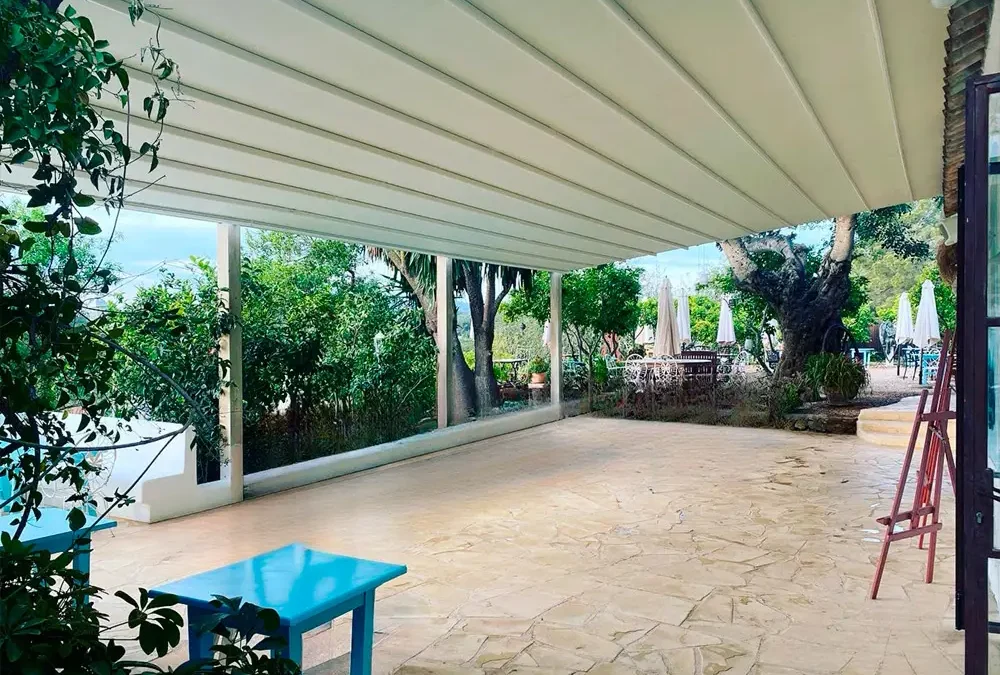
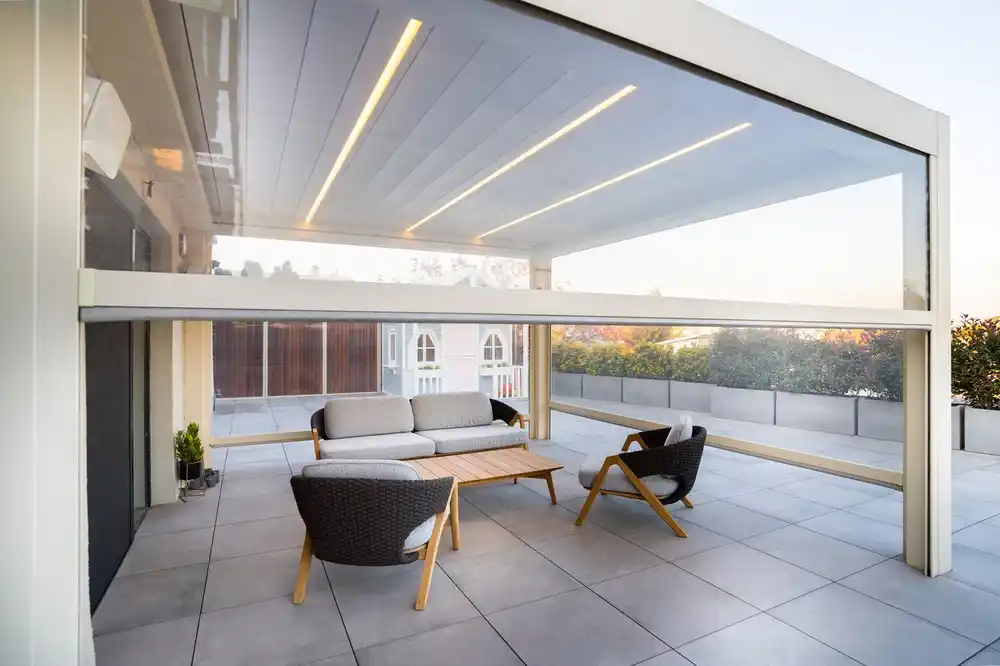
Frameless tempered-glass curtains offer the most effective barrier against wind and marine humidity. They block tramuntana gusts without altering the view towards the sea or the garden. On sunny January mornings, the closed panels create a pleasant passive greenhouse effect that warms the space naturally. In summer, they fold completely to one side and disappear.
2. Bioclimatic pergolas with adjustable louvres
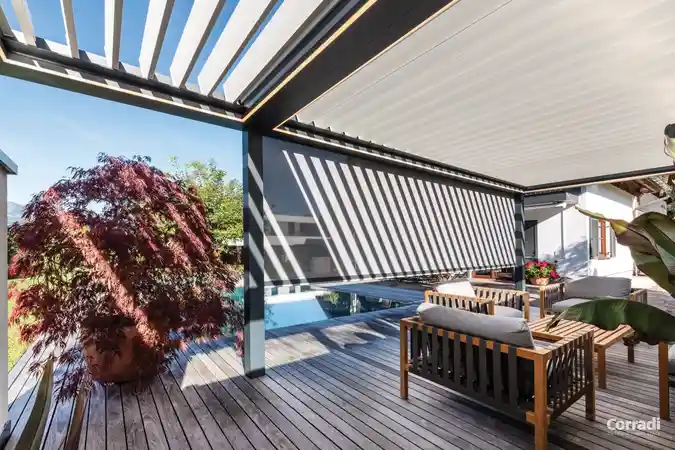
The roof is the main escape route for rising warm air. A powder-coated aluminium bioclimatic pergola lets you tilt the louvres during the middle of the day to capture the low winter sun. At nightfall, the louvres close tightly. This creates a sealed canopy that traps accumulated heat and channels rainwater through the pillars.
3. Short-wave infrared outdoor heating
Traditional gas mushroom heaters warm the air, which disperses quickly in the slightest breeze. In contrast, short-wave infrared emitters heat people and solid objects directly. Therefore, they deliver instant warmth similar to sunshine on the skin. In addition, they carry an IP65 waterproof rating, consume less energy and integrate discreetly into the pergola structure.
4. Motorised ZIP-guided windbreak screens
As an alternative or complement to glass, zip-track roller blinds with technical fabric block cold wind with a certified resistance of up to 100 km/h. They also preserve privacy and reduce coastal breeze without cutting light.
Floors and outdoor textiles: how to insulate Balearic stone terraces from the cold
Many traditional villas and farmhouses in Ibiza feature outdoor pavements made of limestone, marès sandstone or porcelain stoneware. Although these surfaces feel pleasantly cool in summer, they transmit a noticeable chill underfoot in winter. To counteract this effect, consider three practical measures:
- Composite or engineered-wood decking: mounted on ventilated battens, it creates an insulating air gap that breaks the thermal bridge between bare feet and the cold slab below.
- Weatherproof outdoor rugs: vinyl or washable synthetic-fibre pieces that define the seating area without trapping mould or dampness.
- Marine-grade cushion fabrics: water-repellent upholstery with closed-cell foam cores that never absorb overnight condensation.
Is it worth upgrading your terrace for winter in Ibiza?
Without question. Upgrading your outdoor space extends the usable area of the property all year round. It also increases the resale value and lets you enjoy the gentle Balearic winter light in full comfort. For restaurants and boutique hotels, it represents a clear competitive edge: outdoor tables that generate revenue in the low and mid seasons, regardless of the weather.
At Tanit Pergotech, we specialise in the design and installation of bioclimatic pergolas, glass curtains and complete outdoor climate-control solutions across Ibiza and Formentera. Every project takes into account the coastal conditions of the island environment.
Want to find out how to prepare your terrace for this winter in Ibiza? Contact Tanit Pergotech and request a personalised technical assessment at no obligation.
Frequently asked questions about winter terraces in Ibiza
Do I need a building permit to install a glass enclosure in Ibiza?
In most cases, glass curtains and bioclimatic pergolas qualify as lightweight, removable structures that do not count as enclosed built area. However, on protected rural land or within homeowner communities in Ibiza and Formentera, you should always check the local municipal regulations and community bylaws before starting the installation.
What type of outdoor heating works best on the islands?
Electric short-wave infrared heaters offer the best performance. They warm people directly through radiation rather than heating the air, so wind does not carry the heat away. Furthermore, they run silently, produce no fumes and resist marine salt thanks to sealed anodised-aluminium housings.
Does a glass enclosure also block wind noise in winter?
Yes. Tempered glass panels of 8 to 10 mm significantly reduce the noise impact of strong gusts. As a result, you can relax and hold conversations inside the terrace in a calm, sheltered atmosphere — even during a tramuntana or llebeig episode.
Will pergolas and glass enclosures deteriorate in Ibiza’s salty, humid winter climate?
Tanit Pergotech installations use extruded aluminium with Qualicoat Seaside marine-grade powder coating and A4 stainless-steel fasteners. These materials prevent corrosion and guarantee long-lasting performance against the coastal humidity and salt air of Ibiza and Formentera.